Table of Contents
- Introduction
- The Importance of Customization in Utility Carts
- Key Features of Custom Utility Carts
- Applications Across Industries
- Benefits of Investing in Custom Utility Carts
- Considerations When Designing Custom Utility Carts
Conclusion
Introduction
In today’s fiercely competitive industrial environment, businesses across the globe are constantly seeking innovative approaches to boost operational efficiency and streamline their workflows. Whether it’s the hustle of a manufacturing facility, the precision of a hospital, or the buzz of a hospitality setting, adaptable transport solutions are essential for sustaining both productivity and safety. The wide-ranging demands of these venues highlight the indispensable role of a thoughtfully engineered custom utility cart. Such carts can be precisely designed to address unique operational challenges, helping organizations move assets efficiently, adhere to safety requirements, and ultimately maximize their output while supporting staff performance.
While standard, off-the-shelf utility carts may serve general purposes, they can fall short when faced with tasks that require specialized handling, organization, or mobility. As workplaces become more complex—with rising expectations for performance and flexibility—more industries are recognizing the game-changing value of custom utility carts. These bespoke solutions can be constructed to suit specific environments, varying materials, and unique ergonomic requirements. The result is a perfectly tailored system that not only boosts productivity but also enhances safety and employee satisfaction by minimizing unnecessary strain and reducing the margin for error within workflows.
The Importance of Customization in Utility Carts
Work environments across industries—from high-intensity manufacturing floors to meticulous healthcare facilities—are distinctly unique, rarely adhering to a one-size-fits-all solution. The ability to customize utility carts allows businesses to design handling solutions that accommodate specialized items, odd-sized materials, delicate goods, or sensitive instruments. This precise tailoring directly contributes to reducing costly delays, workflow bottlenecks, and workplace disruptions caused by ill-fitting equipment. For employees, custom carts mean greater ease, reduced risk of strain or injury, and a smoother daily routine.
In industries with stringent regulatory and safety standards, such as healthcare, pharmaceuticals, laboratories, and even food processing, the potential for error and contamination must be minimized. Custom carts can help organizations remain in strict compliance with industry rules by featuring lockable sections, removable shelves for easy sanitation, anti-microbial surfaces, and separation for hazardous or sterile materials. These options ensure not only a safer working environment but also regulatory peace of mind, adding another layer of reliability to daily operations.
Key Features of Custom Utility Carts
- Material Selection: Different industries are exposed to various operational hazards and environmental challenges, such as exposure to chemicals, temperature fluctuations, or the need for regular deep cleaning with harsh agents. Choosing from options like stainless steel—which offers excellent corrosion resistance—aluminum, high-impact plastics, or durable composite materials is fundamental to ensuring the cart’s longevity and safe operation.
- Load Capacity: The diversity in weights and dimensions of transported items demands careful calculation of load capacity for every cart. Whether you are moving lightweight medical trays, heavy equipment parts, or bulk retail goods, selecting the appropriate weight rating prevents structural failures, reduces the risk of employee injuries, and enhances the overall reliability and efficiency of each transport cycle.
- Ergonomic Design: The physical well-being of employees is a growing concern in high-volume workplaces. Features such as adjustable handles, non-slip grips, and strategically placed or height-adjustable shelves help in minimizing repetitive motion injuries, back strain, and fatigue. By fostering ergonomically friendly designs, organizations support worker longevity, reduce compensation claims, and promote higher productivity rates.
- Specialized Compartments: Industries often require strict organization, especially when handling sensitive equipment, hazardous materials, or fragile products. Customizable storage compartments and modular trays within utility carts allow for clear separation and straightforward access to contents. This ensures valuable items are securely held in place and remain protected from mishandling or accidental damage during transit.
Applications Across Industries
The reach of custom utility carts spans nearly every commercial and industrial field, serving as a critical asset wherever the safe and efficient movement of goods, tools, or materials is required. The adaptability and precision of design make these carts integral to many professional settings:
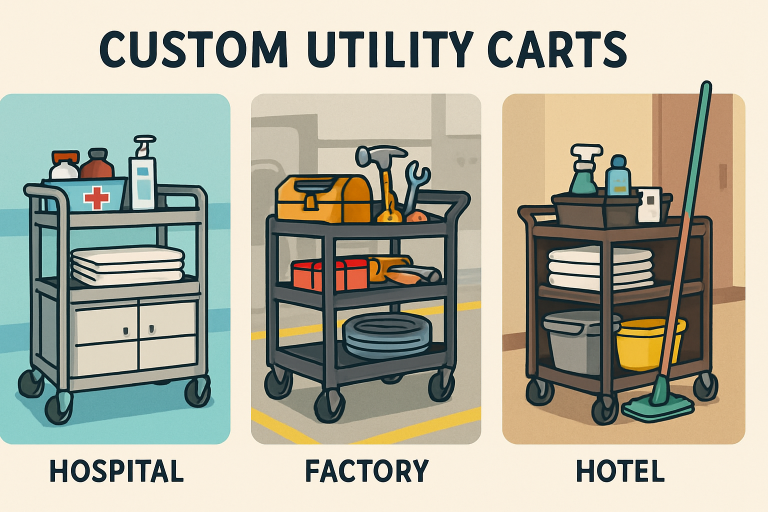
- Healthcare: In hospitals and clinics, the fast-paced environment demands quick access to essential medical supplies. Custom carts, tailored with features such as medication storage, waste disposal, and specialized shelving, help medical teams transport instruments and supplies seamlessly, ultimately improving the timeliness and quality of patient care and supporting compliance with sterilization protocols.
- Manufacturing: On the factory floor, production processes often involve moving bulky, irregular, or sensitive parts and tools between stations. Custom utility carts offer targeted solutions, featuring compartments for specific parts and reinforcement for heavier loads, which helps manufacturers minimize downtime, optimize assembly lines, and implement lean manufacturing strategies.
- Retail: In retail settings, efficient restocking and inventory management are mission-critical, especially during high-traffic periods. Custom carts enable staff to quickly move products from stockrooms to shelves, facilitating faster replenishment, reducing the risk of product damage, and minimizing staff fatigue, which directly supports increased customer satisfaction and operational efficiency.
- Hospitality: Hotels, resorts, and restaurants rely heavily on the ability to efficiently move linen, cleaning supplies, food trays, and waste through their spaces. Purpose-built carts streamline housekeeping, catering operations, and room service delivery, allowing teams to deliver a faster, more organized, and pleasant experience for guests and patrons.
Benefits of Investing in Custom Utility Carts
- Enhanced Efficiency: A cart upgraded with custom features—such as designated slots for barcoding equipment or reinforced frames for bulky machine parts—removes guesswork and delays, ensuring every component of your operation runs smoother and faster. As a result, frontline staff can focus on their core responsibilities instead of struggling with poorly suited equipment.
- Improved Safety: By aligning the cart’s specifications with the demands of the workflow, organizations can significantly reduce the risks of overexertion, repetitive strain, and workplace accidents. Minor adjustments to cart design can reap significant dividends in morale and overall well-being, fostering a culture of safety throughout the workforce.
- Cost Savings: Although custom solutions generally entail a higher initial investment than mass-produced models, the long-term return—achieved through greater operational efficiency, lower maintenance and repair costs, and reduced injury rates—translates into substantial savings over the life of the equipment.
Considerations When Designing Custom Utility Carts
The effectiveness of a custom utility cart hinges on in-depth planning and close collaboration with experienced manufacturers. Start the process by thoroughly evaluating your operation: What types of items will be transported? Are there special handling or environmental concerns, such as exposure to moisture, pathogens, or extreme temperatures? Will the carts need to navigate challenging terrain, such as narrow hallways, elevators, or uneven flooring?
Material durability, ease of cleaning, resistance to chemicals, and overall maneuverability are all crucial factors. For sterile environments, such as laboratories or healthcare facilities, stainless steel might be the preferred choice due to its ability to withstand frequent disinfection. For other areas, durable plastics may offer adequate performance at a lower cost and lighter weight, making daily use easier and more ergonomic for staff. According to Popular Mechanics, for those looking to create a DIY option or gain inspiration for custom carts, there are step-by-step guides available for building rolling carts suited for workshops and other settings.
Proper planning and thoughtful material selection ensure the cart meets both functional and safety requirements. Investing time in these considerations can save costs and reduce operational challenges in the long run.
also read: Roofing Company vs. Roofing Contractor: What’s the Difference and Why It Matters
Conclusion
The versatility, durability, and effectiveness of custom utility carts position them as vital assets for organizations striving to drive operational excellence and maintain a competitive advantage across varied industries. From the careful selection of materials to the meticulous design of compartments, each element can be fine-tuned to fit specific needs and maximize workflow efficiency. By embracing a customized approach, companies equip their teams with solutions that meet the nuanced requirements of today’s dynamic workplaces, ensuring they are set up for sustained success now and in the future.