
Key Takeaways
- Alignment across sales, marketing, and customer success teams is essential for consistent revenue growth.
- Leveraging technology and data analytics enhances decision-making and operational efficiency.
- Continuous improvement and adaptability are vital in responding to market changes.
Table of Contents
- The Importance of Team Alignment
- Leveraging Technology for Growth
- Data-Driven Decision Making
- Enhancing Collaboration Across Teams
- Focusing on Customer Success
- Continuous Improvement and Adaptability
- Conclusion
In today’s highly competitive business landscape, sustaining consistent revenue growth is the goal for nearly every ambitious organization. The achievement of this objective increasingly falls to revenue teams, which are made up of professionals from sales, marketing, and customer success. Their collaborative efforts ensure that strategies are both customer-centered and commercially viable. Whether you are expanding into new markets or trying to outperform established competitors, successful growth relies on a keen understanding of revenue operations and the alignment of all members of the revenue-generating engine.
The structure and strategy of revenue teams have evolved, blending technology, data, and cross-departmental collaboration. This holistic approach allows organizations to react quickly to market changes, leverage deep customer insights, and outperform competitors who still operate in silos. When sales, marketing, and customer success align on objectives and processes, companies achieve superior results, including higher win rates and improved retention.
By adopting a modern, integrated approach, revenue teams can ensure sustainable growth that remains resilient amid external volatility. Technology plays a pivotal role, bringing together insights from each team, streamlining the buyer’s journey, and removing administrative friction. As organizations grow more sophisticated, the demand for agility and continuous improvement becomes paramount.
Revenue teams that invest in foundational skills like collaboration and adaptability tend to outperform those that rely solely on traditional models. The benefits are far-reaching, touching everything from customer satisfaction metrics to financial forecasts.
The Importance of Team Alignment
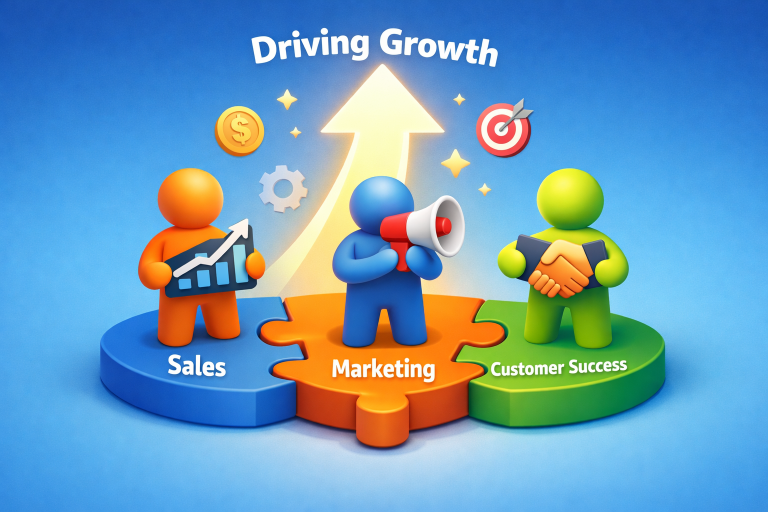
Revenue growth begins with alignment. When sales, marketing, and customer success teams share common objectives and clear communication channels, their collective efficiency soars. Organizations that achieve optimal team alignment report up to 32 percent faster revenue growth and 36 percent greater customer retention than those operating in fragmented silos. Aligned teams share critical customer insights, coordinate outreach, and provide a seamless, personalized customer journey. Shared metrics and dashboards help keep everyone accountable and prevent duplicated efforts.
Leveraging Technology for Growth
Technology solutions have transformed the way revenue teams operate. Tools such as CRM systems, marketing automation platforms, and integrated analytics enable teams to capture and utilize insights across the customer lifecycle. Automated workflows reduce manual errors and free team members to focus on strategic initiatives. Platforms unifying data from sales, marketing, and customer success help eliminate blind spots, ensuring that all customer-facing teams work from the same data set and insights. Real-time analytics, for example, enhance forecasting accuracy and inform tactical pivots.
Data-Driven Decision Making
Harnessing the power of analytics transforms raw data into actionable insights. Revenue teams depend on robust analytical frameworks to monitor sales performance, track campaign effectiveness, and evaluate the health of sales pipelines. This approach helps organizations identify high-performing channels, glaring inefficiencies, and patterns in customer behavior. Making decisions based on data reduces guesswork and the potential for costly mistakes. Advanced analytics guide not only operational decisions but also long-term strategic planning, giving companies a significant competitive edge.
Enhancing Collaboration Across Teams
Fostering regular, open collaboration among revenue teams is key to success. Cross-functional meetings, shared digital workspaces, and mutual goals align individual incentives with corporate outcomes. Clear documentation of processes and responsibilities minimizes misunderstandings and streamlines handoffs between functions. This collaborative environment also nurtures creativity, as diverse perspectives combine to solve complex challenges. Organizations that prioritize team-based problem-solving consistently report better lead quality, higher conversion rates, and more effective customer onboarding.
Focusing on Customer Success
The ultimate test of a revenue team’s effectiveness is customer success. Teams focused on understanding and supporting the customer’s journey outperform the competition in retention and upsell opportunities. By listening closely to customer needs and feedback, teams can offer proactive solutions that result in lasting relationships. Organizations that invest in comprehensive customer success initiatives realize higher renewal rates and stronger advocacy networks, which feed back into growth and market expansion.
Continuous Improvement and Adaptability
A culture of continuous improvement empowers revenue teams to adapt to changing market dynamics. By frequently reviewing performance metrics and seeking feedback from both customers and internal stakeholders, teams can refine tactics and processes continuously. This adaptability ensures that organizations remain resilient in the face of disruptions, whether due to technological shifts or economic changes. Regular training, experimentation with emerging tools, and agile planning cycles position teams to capture opportunities and address obstacles effectively.
Conclusion
Achieving consistent revenue growth requires many moving parts to work in close coordination. Aligning revenue teams, embracing technology, relying on data-driven decisions, strengthening collaboration, focusing on customer success, and maintaining a commitment to continuous improvement all contribute to this goal. By weaving these elements into the fabric of their operations, organizations position themselves to thrive in an evolving marketplace.