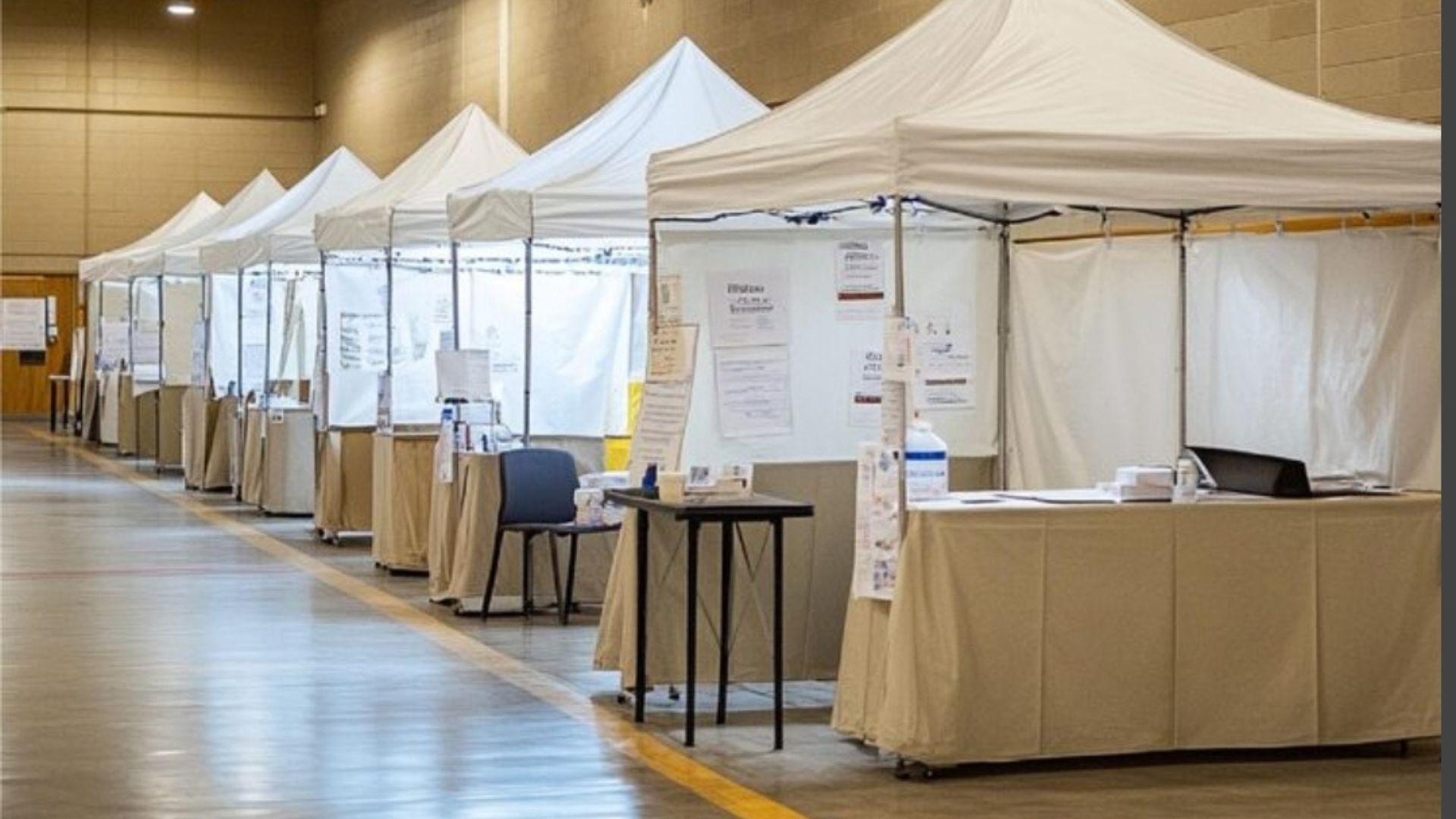
Setting up your stand on event day can make the difference between a sophisticated, professional event and a rushed, unpolished one. All of this has to happen within a short timeframe, and at times with various exhibitors and vendors working at the same time. A minor failure or misunderstanding of responsibility can cause a domino effect of delays. An impressive entrance may be possible with the use of a custom inflatable arch, but its effectiveness relies on well-prepared delivery, inflation equipment, anchoring, and placement, ready when installation starts. Whether a custom-built or rented exhibition tent, a well-planned approach can minimize downtime and support a seamless transition from an empty exhibition floor to a branded environment.
5 Steps for Faster and More Reliable Event-Day Setup
- Create a Detailed Pre-Event Setup Checklist
The biggest key to avoiding set-up delays is to delegate decision-making to the extent possible ahead of event day. A comprehensive checklist listing all components needed to set up the tent should include: tent structure, graphics, flooring, lighting, furniture, power equipment, tools, fasteners, signage, and promotional items.
Any special requirements should be given special attention. For example, this might include special requirements for cooking equipment, electrical power, ventilation, fire safety, food-service counters, and access to utilities at a food vendor tent setup.
An inventory of the components can be made before the event to ensure everything is packed and labeled. If a photo or a diagram of the finished product is available, it can also help the installers with some visual reference, and this will decrease the uncertainty when installing.
- Confirm Venue Rules and Delivery Logistics in Advance
The majority of event day problems stem from prior to the equipment’s arrival on the exhibition floor. Access times, loading and unloading docks, freight times, union mandates, storage time, electrical codes, and installation windows vary widely from venue to venue.
Confirming these requirements in advance helps avoid having equipment arrive before delivery or installation delays due to a missing setup checklist.
All logistics should be determined and documented in a delivery plan that includes delivery timings, unloading, equipment storage, and access to installation and removal details. Plans should also be checked to ensure booth size, adjoining exhibits, entrances, columns, and other potential challenges are correct.
- Assign Clear Roles to the Installation Team
A more than adequate workforce is needed for a quick installation. Each member of the setup team should know what everyone’s responsibilities are, what parts they share, and who has authority to make decisions if an unexpected problem arises.
One team can focus on structure construction, while the other can focus on graphics, electrical equipment, furniture, and finishing details. A designated lead can coordinate these activities and prevent multiple people from doing the same work.
Sequencing is especially crucial for show tents. Structural components should be in place before decorative components to avoid damage to the graphics or furnishings caused by movement.
- Assemble Critical Components Before Reaching the Venue
When feasible, it can pre-assemble all the work on the floor and save unnecessary work on site. Graphics can be inspected, hardware can be clustered to the installation order, and modular parts can be tested prior to shipment.
Another way to check inflatable structures before they are transported to the site is to inspect them for any damaged fabric, damaged valves, blowers, and anchoring equipment. This can help them see if something is missing or damaged before it is too late to get it replaced.
The packing system is labeled clearly, which further enhances the installation time. Everything is grouped into zones/installation steps, and it is easy for teams to find exactly what they need without opening all cases.
- Reserve Time for Testing and Final Inspection
Setup is never done as “spare time.” A setup exhibit should be “tuned up” before exhibiting to allow for correcting issues that may be unexpected.
All structural connections, anchors, graphics, lighting, electrical equipment, flooring, furniture, displays, and signage should be inspected. Inflatable structures need to be inflated and securely anchored as per the manufacturer’s instructions.
A final walk-through can also evaluate the visitor experience. Walkways need to be accessible, messaging should be visible from relevant walkways, meeting areas should be accessible, and promotional materials should be in place where they can be easily accessed.
End Point
The process of setting up events without hassle starts well before the exhibition floor opens. There are a lot of everyday reasons to delay things that can be eliminated by having detailed checklists, confirmed logistics, clearly defined responsibilities, pre-assembled components, and dedicated inspection time. From a small rented tent to a large custom-made exhibition setting, preparation is the key to achieving efficiency in the installation process. If each component, person, and task is assigned a specific location in the process, the event-day set-up is faster, more relaxed, and much more predictable.