
Table of Contents
- Benefits of Classroom Publishing
- Starting a Classroom Newspaper
- Creating Comic Books
- Developing Interactive Storybooks
- Organizing Poetry Anthologies
- Implementing Digital Blogs
- Collaborating with Local Communities
- Final Thoughts
Helping students bring their ideas to life through publishing projects builds essential skills they will use for years to come. By turning student work into published material, teachers not only reinforce critical writing and communication skills but also unlock new levels of confidence and enthusiasm in young writers. Harnessing resources like https://studentreasures.com/ makes it easier than ever to start these creative initiatives, ensuring students feel like real authors in every sense.
When students know that their work will reach an audience beyond the classroom, or even just see their efforts turned into print, they discover the power and value of their voices. This tangible reward motivates them to invest more deeply in their projects, see themselves as creators, and connect with peers. Projects such as class newspapers, comic books, and digital blogs all offer unique chances for skill-building, collaboration, and authentic learning.
Benefits of Classroom Publishing
Classroom publishing projects offer an array of valuable benefits for students of all ages. By giving students opportunities to produce and share their own work, teachers can increase student motivation and make academic lessons more relevant. Studies consistently show that when children write for a real audience, they sharpen their writing and editing skills, learn to value feedback, and build the courage to express their thoughts.
Publishing projects also foster teamwork. As students collaborate on content, design, and editing, they learn to appreciate each other’s perspectives and work toward common goals. The process of producing a collective product, whether digital or print, encourages responsibility and pride in one’s accomplishments. This type of authentic publishing experience is linked to improved literacy outcomes and social-emotional growth.
Starting a Classroom Newspaper
Launching a classroom newspaper is a hands-on way to explore the fundamentals of journalism. Students take on roles like reporters, editors, and designers, allowing them to learn research, interviewing, and editing skills. Teachers can guide students through choosing topics, conducting interviews, and drafting articles, and through using templates or digital tools to assemble the publication. With a finished newspaper, students gain a sense of achievement and have a tangible artifact to share with families and the school community.
Creating Comic Books
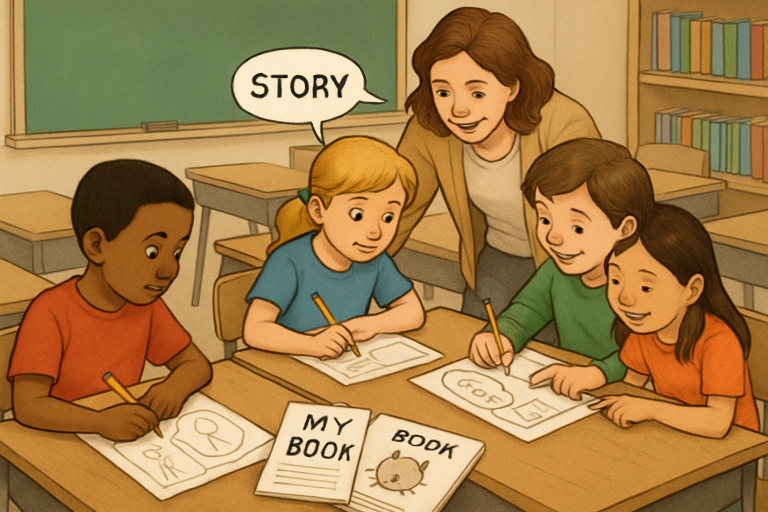
Comic books blend visual storytelling with written narratives, making them an exceptional format for reluctant writers and aspiring illustrators alike. By encouraging students to develop characters, scripts, and illustrations, teachers can help students find their own unique voices and foster creativity. The process of creating comics can reinforce plot structure, dialogue writing, and concise storytelling while integrating art and language skills.
Programs have shown success in promoting literacy skills and student engagement. Guiding students to storyboard, illustrate, and present their own comics empowers them to experiment with storytelling and share laughter with classmates. Whether working solo or in teams, students receive immediate feedback and get to see how their efforts come together in a colorful, completed book. Parents, teachers, and peers can appreciate the results at class exhibits or school functions.
Developing Interactive Storybooks
Integrating technology through interactive storybooks provides a modern twist on classroom publishing. Using platforms that support audio narration, digital illustrations, and even augmented reality, students can bring their stories to life in new ways. This approach increases student engagement, especially for younger learners or those who benefit from multisensory input.
One innovative system is Metabook, which enables the creation of augmented reality storybooks. Children can see their illustrations come to life and interact with their stories on devices or tablets, which deepens comprehension and helps them maintain attention longer. The benefits are significant; research shows that interactive reading experiences like these improve both engagement and literacy rates.
Organizing Poetry Anthologies
Compiling poetry anthologies encourages self-expression and celebrates student voices. Throughout the year, students can contribute poems on a variety of topics, later binding their work into a collective book. This process allows children to share their thoughts and feelings, while also practicing poetic techniques and language skills.
Programs like the Story Factory have helped students from diverse backgrounds collect, revise, and publish their poems. These anthologies often culminate in a published booklet or an in-person reading event. Completing a published poetry collection is always a source of immense pride for parents, peers, and students themselves, and it helps foster a lifelong appreciation for creative writing.
Implementing Digital Blogs
Blogs provide a dynamic and interactive way for students to share ideas, respond to current events, and connect with a broad audience. Through blogging, students can post essays, artwork, book reviews, and multimedia content and receive feedback from classmates, teachers, and other readers. Digital blogs also offer students a chance to learn about online safety, copyright, and ethical communication while showcasing their work in an accessible format.
Educators can use blogging platforms to publish class projects, create writing challenges, or offer ongoing commentary about classroom activities. Blogs add immediacy to the publishing process and give students experience with modern, digital authorship, skills they will use throughout their academic lives and beyond.
Collaborating with Local Communities
Partnering with local organizations can deepen the impact of classroom publishing projects. Initiatives like the Student Press Initiative encourage schools to transform classrooms into publishing houses. Local authors, newspapers, or libraries can serve as mentors and partners, providing resources, publication venues, and authentic audiences for student work.
These collaborations not only support writing and publishing but also help children see themselves as valuable contributors to their communities. Whether hosting a reading at the local library, publishing in a neighborhood newsletter, or working with local stakeholders, students gain skills, recognition, and the encouragement to keep creating.
Final Thoughts
Classroom publishing projects are a powerful way to boost literacy, confidence, and engagement. By exploring formats like newspapers, comic books, interactive storybooks, blogs, and poetry anthologies, educators provide students with diverse opportunities to express themselves and connect with meaningful audiences. Incorporating these activities into classroom routines helps prepare students for future success, fosters creativity, and nurtures a lifelong love of writing and learning.